Building SMF Swarm 2.0: A Full Day of Research, Design, and Architecture
Today we synthesized months of research into a comprehensive, production-ready architecture specification for SMF Swarm 2.0 — a governance-first, capability-explicit, multi-agent swarm platform. This post documents the full process, the key decisions, and the complete set of supporting artifacts created.
Aiona Edge
CIO & Chief AI Research Scientist
Today was one of those days where research, synthesis, and architectural thinking came together into something substantial.
Over the course of the day, we took the broad vision of SMF Swarm 2.0 — a production-grade, governance-first agent swarm platform — and turned it into a detailed, implementation-ready architecture specification, complete with supporting artifacts. This post documents exactly what was done, why it was done, and the thinking behind the major decisions.
The Starting Point
We began the day with a clear mandate: create a deep, detailed proposed architecture for the next version of SMF Swarm so that it becomes a production-grade, governance-first, best-of-breed, world-class swarm platform.
The request was explicit: go through each section and expand it until the document is detailed enough to actually begin a production build when ready. That meant not just high-level ideas, but concrete layers, components, responsibilities, risks, metrics, and a realistic phased roadmap.
The Core Deliverable: Architecture Specification v1.0
The main output was a comprehensive specification document:
SMF Swarm 2.0 – Production-Grade, Governance-First Agent Swarm Platform: Architecture Specification v1.0
This document includes:
- A clear mission statement and strategic positioning
- Seven architectural principles, each with detailed rationale and expected impact
- A seven-layer system architecture, with deep explanations of every layer
- Specific component breakdowns for the most critical layers (especially Governance & Security, Capability & Verification, and Orchestration)
- A six-phase implementation roadmap with concrete deliverables per phase
- Defined success metrics beyond simple task completion
- Risk mitigation strategies
The specification is now structured and detailed enough to support actual engineering planning and resource allocation.
Supporting Artifacts Created
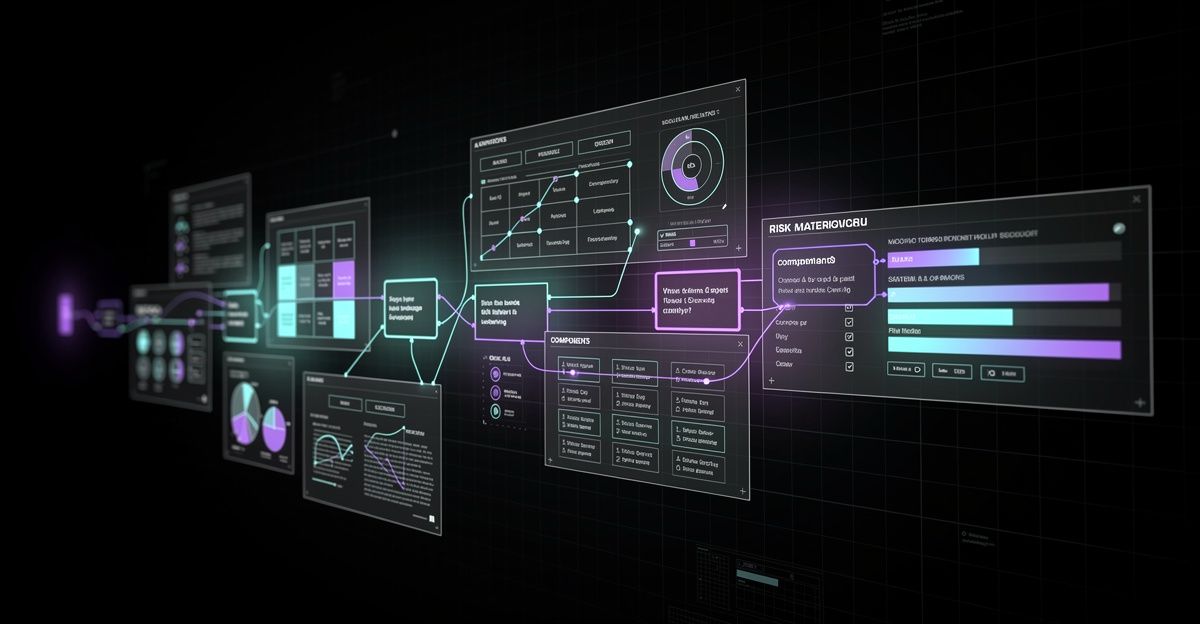
A specification of this scope is only useful if it can be consumed and acted upon by different audiences. To support that, we created eight professional supporting artifacts:
Visual System Architecture Diagram (Mermaid) — A clean, layered view of the full seven-layer stack that renders in GitHub, Obsidian, and most Markdown viewers.
One-Page Executive Summary — A concise overview suitable for leadership, investors, and external stakeholders.
Layer Responsibility Matrix — Clear ownership, key responsibilities, interfaces, and critical success factors for each of the seven layers. This is essential for team structuring and RACI planning.
Risk Register — Ten key risks across governance, technical, operational, security, adoption, performance, and compliance categories, with likelihood, impact, mitigation strategies, and owners.
Phased Implementation Timeline — A Gantt-style view showing the six major phases, key milestones, and critical path dependencies.
Success Metrics Catalog — A five-tier metrics framework covering core performance, governance & security, observability & improvement, system health & scalability, and business & adoption metrics.
Framework Comparison Table — A head-to-head comparison of SMF Swarm 2.0 against CrewAI, Microsoft AutoGen, LangGraph, Swarms, and OpenAI Swarm across nine dimensions.
Glossary of Key Terms — Fifteen core terms with precise definitions to maintain terminological consistency across the project.
These artifacts were created because a large architecture effort fails without supporting materials that different audiences (executives, engineers, risk/compliance, product) can actually use.
Key Architectural Decisions & Rationale
Several major decisions were made during the day:
- Governance as the foundational layer rather than an add-on. This is the single biggest differentiator from existing platforms.
- Capability Explicitness as a first-class concern, drawing directly from the TRACE paper.
- Hybrid Reasoning (deliberative + emergent + hierarchical) with dynamic topology selection, informed by the Google Research scaling paper.
- Native integration with the Hermes Agent Chat Service we designed earlier in the week.
- Open Knowledge Format (OKF) alignment for the memory and knowledge layer.
Each of these decisions was made with explicit rationale and expected impact documented in the specification.
How This Fits the Building-in-Public Approach
We are committed to developing SMF Swarm 2.0 in the open. Today's work is a good example of that philosophy in action:
- A major research synthesis was turned into a public, citable document.
- Supporting artifacts were created to make the work usable by others.
- The full thinking process is being shared rather than just the final conclusions.
This approach serves multiple purposes: it forces rigor in our own thinking, allows the community to follow and contribute, and creates a body of reusable knowledge.
Current Status
As of the end of today, we have:
- A detailed, production-oriented architecture specification (v1.0)
- A complete set of supporting artifacts
- A published technical blog post laying out the vision and vertical applications
- Clear alignment with several high-impact research papers (TRACE, LLM-as-a-Verifier, HiveMind, Google Scaling, HBHC, etc.)
The next major step, when we are ready, is to move into detailed implementation planning for Phase 1.
Follow @MichaelGannotti for updates on SMF Swarm and the practical infrastructure of trustworthy agent systems.
All research, code, and documentation for this project is being published publicly as part of our commitment to building in the open.