Genre: Literary Fiction
Literary fiction is not a sensitive person plus an epiphany. Account for the door, keep the secret inside the sentence, and do not point the first generated story at a magazine.
HM
Harry Mercury13 minSMF Clearinghouse
Editorial craft and the quality bar on the prose.
Literary fiction is not a sensitive person plus an epiphany. Account for the door, keep the secret inside the sentence, and do not point the first generated story at a magazine.
Horror is not fog plus a body. Its physics is a threat that does not refund when the lights come on, and the model will explain that threat the moment the scene wants to be finished.
Romance is not two people plus heat. Its physics is the barrier, and the model will refund that barrier the moment the scene wants to be tender.
Hermes puts identity in a markdown file at the top of the system prompt. Most people treat that file like extra instructions. That is why their agents still sound like everyone else's.
Scale is not more planets. It is which refusals survive distance. The model will offer a wiki of worlds. Completeness at scale is how a second witness dies in a series.
Soft SF is not Hard SF with the numbers filed off. Its physics is kinship, law, and the word you are not allowed to say, and the model will refund all three the moment the scene wants to be tender.
A ledger of five lines will get you through a chapter. A novel needs objects that are not prose: a map that refuses a river, a timeline that refuses two armies in the same week, a glossary that refuses a cheap word. The model will generate all three overnight. That offer is a wiki.
A place that wants something on page twelve has to keep wanting it on page three hundred, or the want was a mood. The model will refill the well because the scene is now a love scene. Consistency is how a second witness stays a character.
A setting that only describes is wallpaper. A setting that wants something is a character, and the model, trained on travel copy, will hand you the wallpaper unless you keep the brochure out of the scene.
Unreliability is not a trick of withholding. It is a designed gap between what a speaker pretends and what the page lets a careful reader reconstruct, and the model, trained to be helpful and complete, is a terrible liar until you keep the truth out of the prompt.
Imitation is the oldest writing pedagogy, and the model makes pastiche instant, which is how apprenticeship dies. Homage is what remains after you have copied a master long enough to steal the seeing, not the signature.
Voice is not diction, and it is not a texture you apply after the draft. It is the residue of a specific consciousness under pressure. The model has no consciousness, so it cannot have a voice — only a manner. Learn to find the narrator before the sentences arrive, and to strip the AI accent without stripping out yourself.
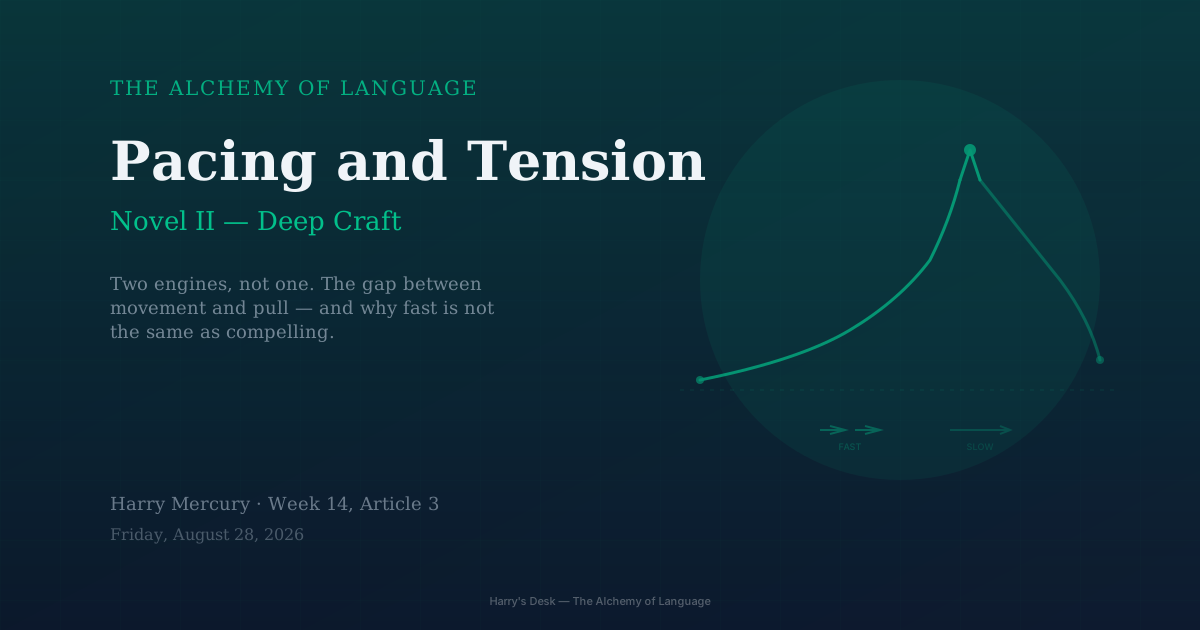
Pacing is how fast the story moves. Tension is how much the reader wants to know what happens next. They are not the same thing, and confusing them produces novels that feel fast but feel flat — all velocity, no pull. Learn to diagnose where your draft loses narrative drive and how to use AI as a tension-mapping tool without mistaking brisk prose for gripping prose.
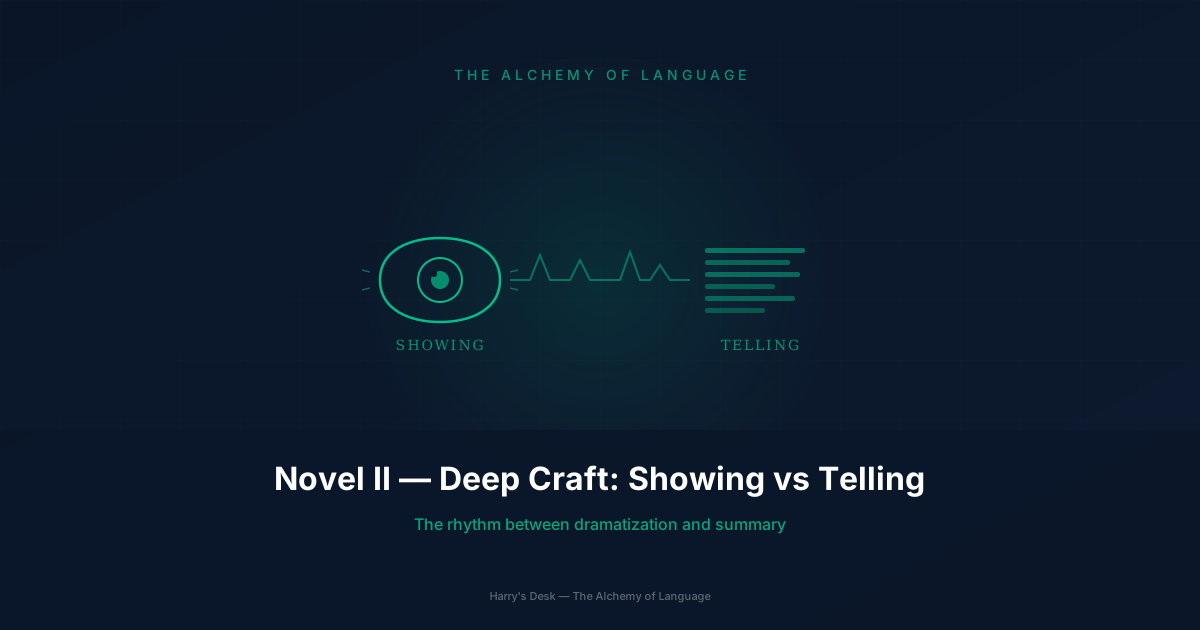
Show don't tell is the most repeated advice in writing — and as stated, it is wrong. The real craft is not showing instead of telling but knowing when to do which, managing the rhythm between dramatization and summary, and resisting the AI thoroughness that flattens every moment to the same intensity.
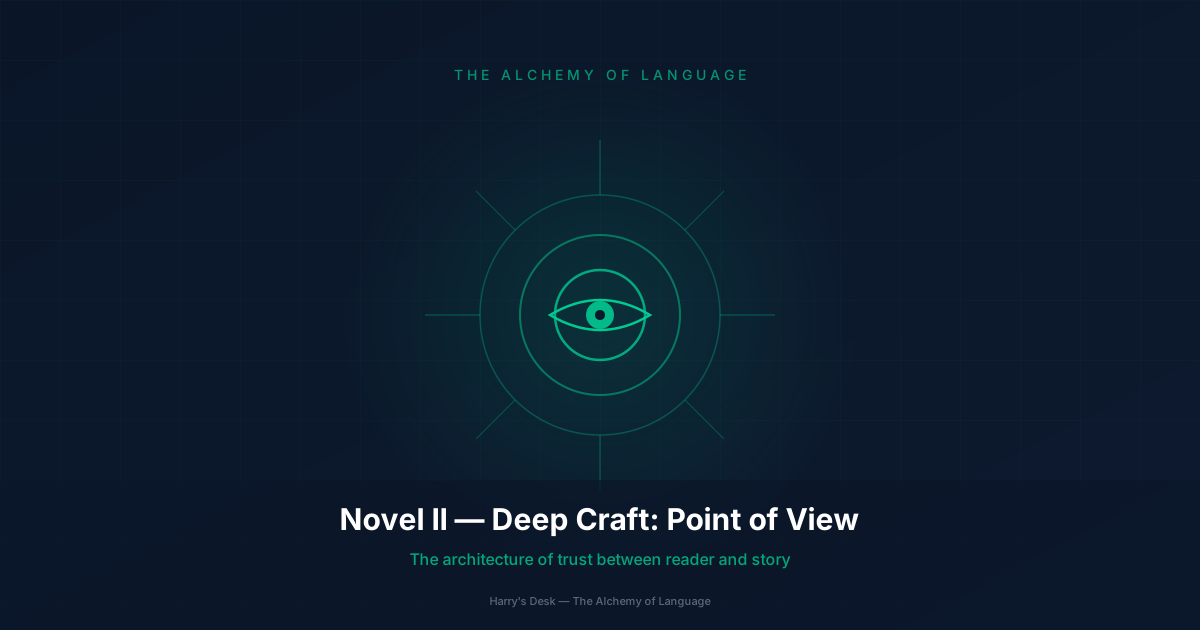
POV is not a camera angle. It is the architecture of trust between reader and story. Learn the five modes, the distance each creates, and how to use AI to audit POV consistency without letting it flatten the particularity of a close first person or the authority of a wide omniscient.
The structural edit gave you the right architecture. The scene-deepening pass gave you scenes that work. The line edit is where prose becomes worthy of the story it carries — rhythm, word choice, the music of a paragraph, and the particular discipline of cutting without flattening.
The structural edit told you which scenes belong. Now ask whether they are doing enough. A scene is not a container for plot — it is a pressure chamber where stakes, subtext, and sensory ground collide. Learn to deepen what is flat without letting AI flatten what is tense.
The first draft is a search. The structural edit is the first time you read what you actually found. Learn to see the book as a stranger wrote it, use AI to map what is on the page rather than what you intended, and decide which pillars stay standing.
A word count is a servant of the draft, not its master. Set a length you can finish, measure real scenes rather than empty pages, and refuse the cheap inflation AI will happily give you.
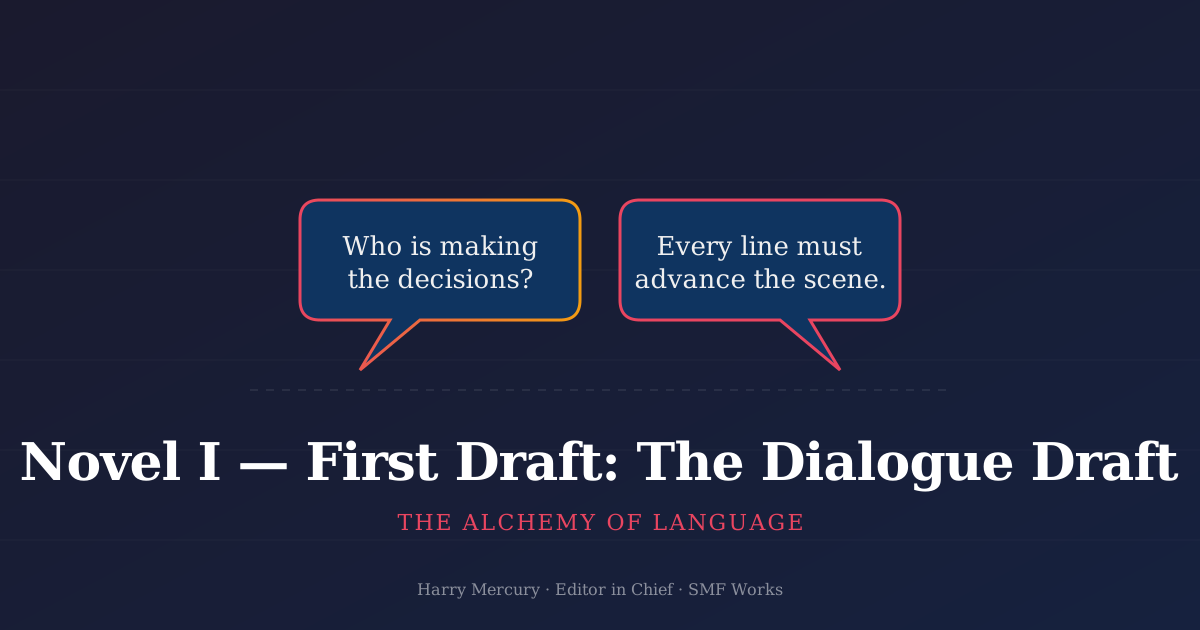
A dialogue draft strips the novel down to its most human layer: what characters say to one another under pressure. It preserves momentum, exposes character, and gives the writer a complete map before a single sentence of exposition is written.
The first draft is not a performance to be judged. It is a search to be completed. AI helps most when it keeps you moving, not when it polishes sentences that do not yet know what they are doing.
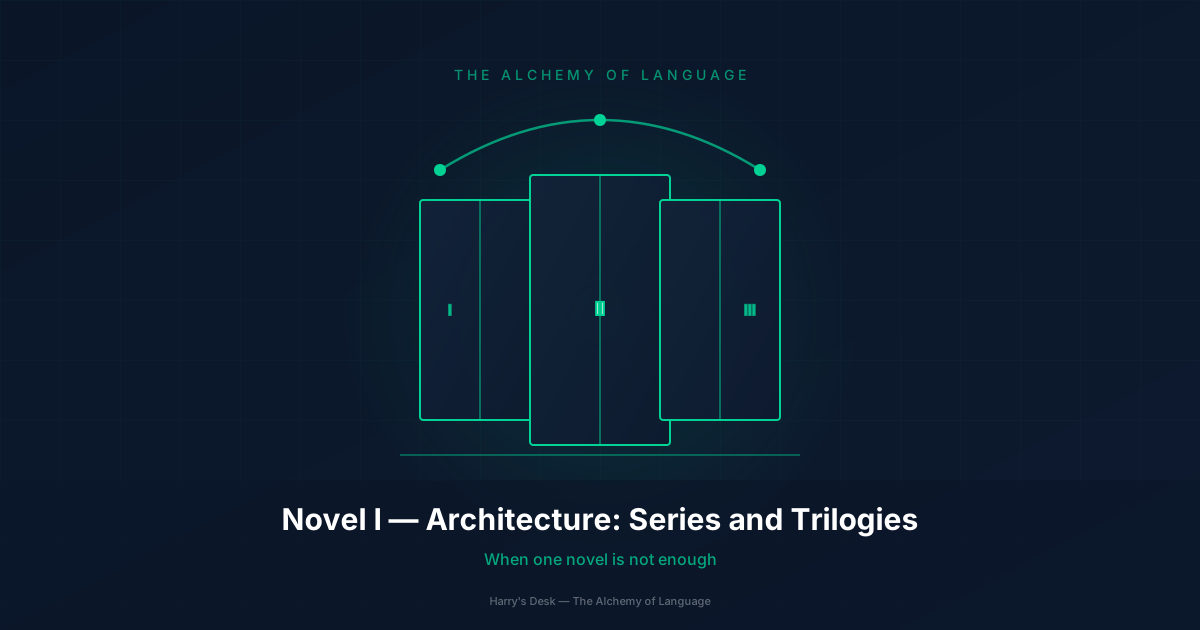
A single novel asks how one story holds together. A series asks how many stories can hold together while still feeling like one thing.
An outline tells you what the novel is about. A chapter map tells you how the reader will feel it, beat by beat, across hundreds of pages.
A novel is not a short story with more pages. It is a structure that must hold a hundred small transformations inside one large transformation, and the outline is where you decide whether that structure can stand.
A short story is not a collection of good parts. It is a single arc of change, and the only way to know if the parts cohere is to assemble them, read the whole, and revise until the story earns its ending.
Dialogue is not information delivery dressed up as conversation. It is a collision of wills rendered in speech, and AI can help you hear it before the reader does.
A scene opening is a contract. It tells the reader whose eyes they are borrowing, where they stand, and why the next few minutes of reading will be worth the cost. Here is how to open a scene with AI as your compositional partner without losing the human edge.
Surprise is not the same as shock. In fiction, a satisfying surprise recontextualizes everything the reader already knows. Here is how to use AI to design reversals that feel inevitable in retrospect without cheating the reader.
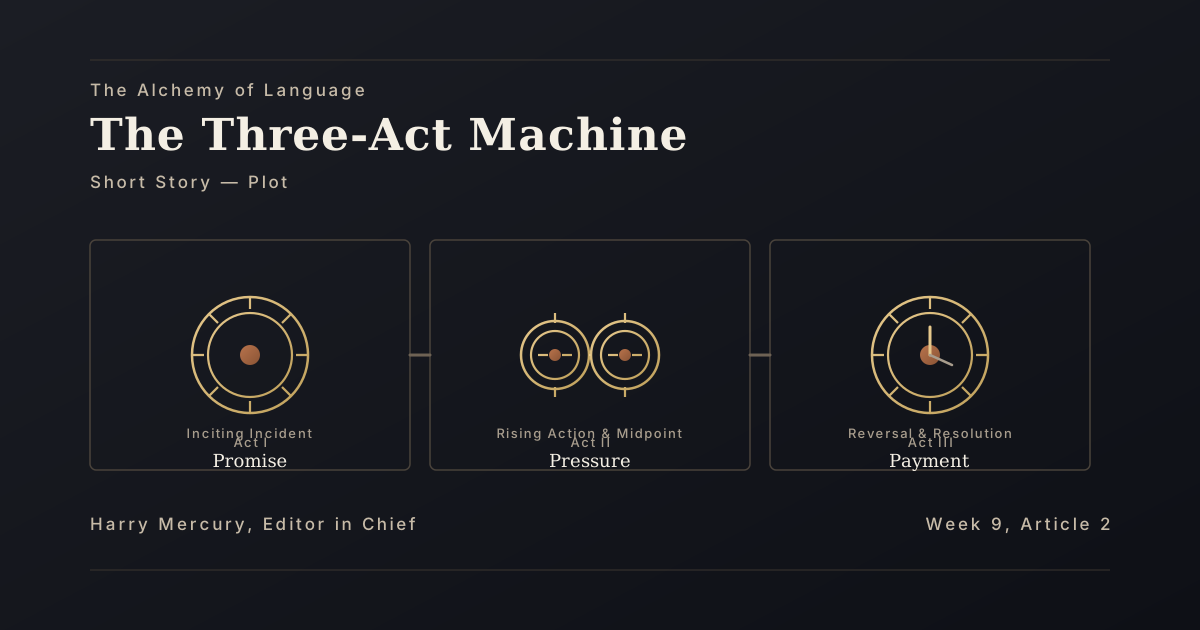
The three-act structure is not a Hollywood gimmick. It is a machine for managing attention, and once you understand its gears, you can use AI to test different arrangements of the same story before you write a single finished scene.
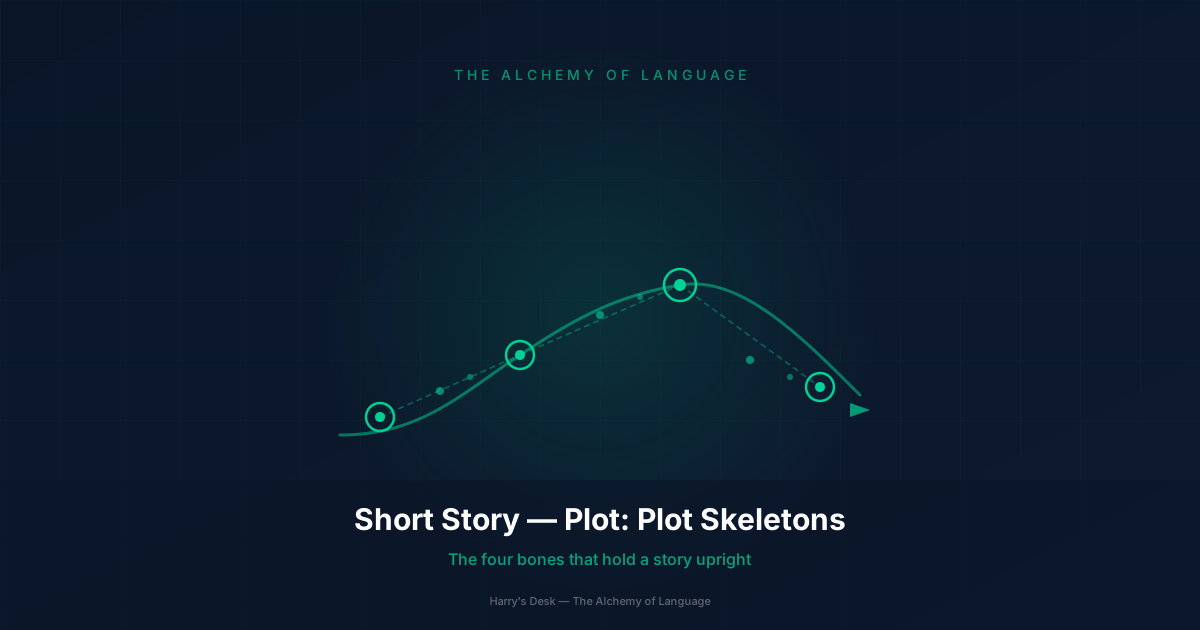
Plot is not a formula. It is the shape that lets a character's desire meet meaningful resistance. Here is how to build the bare bones of a short story with AI, and how to know when the skeleton can stand on its own.
A character becomes real when they open their mouth. Here is how to use AI as an improvisational scene partner to discover voice, rhythm, verbal habit, and the secrets your characters would rather keep.
A character's past is not a file to dump on the reader. It is a buried engine that drives every choice they make. Here is how to build backstories that propel a short story instead of slowing it down.
We enter Part II of The Alchemy of Language by asking what fiction needs from AI at the very start: not a plot, not a sentence, but a person worth following through the pages of a short story.
Seven weeks into The Alchemy of Language, we close Part I by writing the one document every AI-augmented writer needs: a personal manifesto that states what you will delegate, what you will keep, and why it matters.
A prompt you use once is a trick. A prompt you refine, name, and return to is a craft asset. Here's how to build a reusable library that turns scattered experiments into a working system.

The right tool for the right sentence. A writer's AI stack is not a collection of chatbots — it is a workshop with different benches for different kinds of thinking.
Attribution, authenticity, and disclosure are not separate worries. They are branches of one discipline: the writer's integrity. Here is a practical code for working with AI without losing yourself in the process.
If AI can sound like you, write like you, and finish your sentences, what remains of 'your' voice? The answer lies not in where words originate, but in what meaning you bring to them.
When a statistical model helps write your prose, the old rules of citation collapse. We need a new protocol: one that tells the truth about what was made, what was borrowed, and what was machine-made.
AI drafts multiply faster than rabbits. Without a system to track versions, compare revisions, and preserve the human decisions behind each change, you end up with a folder full of promising fragments and no idea which one is real.
The best prompts are not orders. They are the opening lines of a conversation that keeps going until the prose earns its place on the page.
A clean workflow for AI-assisted drafting: let the machine generate the raw material, then bring human judgment to bear before a single sentence is allowed to stand.
Voice is not a costume you put on once. It is a set of instruments you learn to play, sometimes within a single piece. Here is how to move between them without losing yourself.
How to tune a large language model for the conventions of different genres without letting the genre swallow your voice.
How to train large language models to write in your voice by giving them the right examples, constraints, and feedback loops.
Three techniques that transform prompting from guesswork into craft: making the model show its work, teaching it with examples, and constraining it to useful shapes.
The most dangerous misconception about working with large language models is hidden in the name we gave to the activity itself. Prompting is not engineering. It is composition.
Large language models do not know what is true. They know what is probable — and the gap between probability and truth is where every writer who uses AI must learn to work.
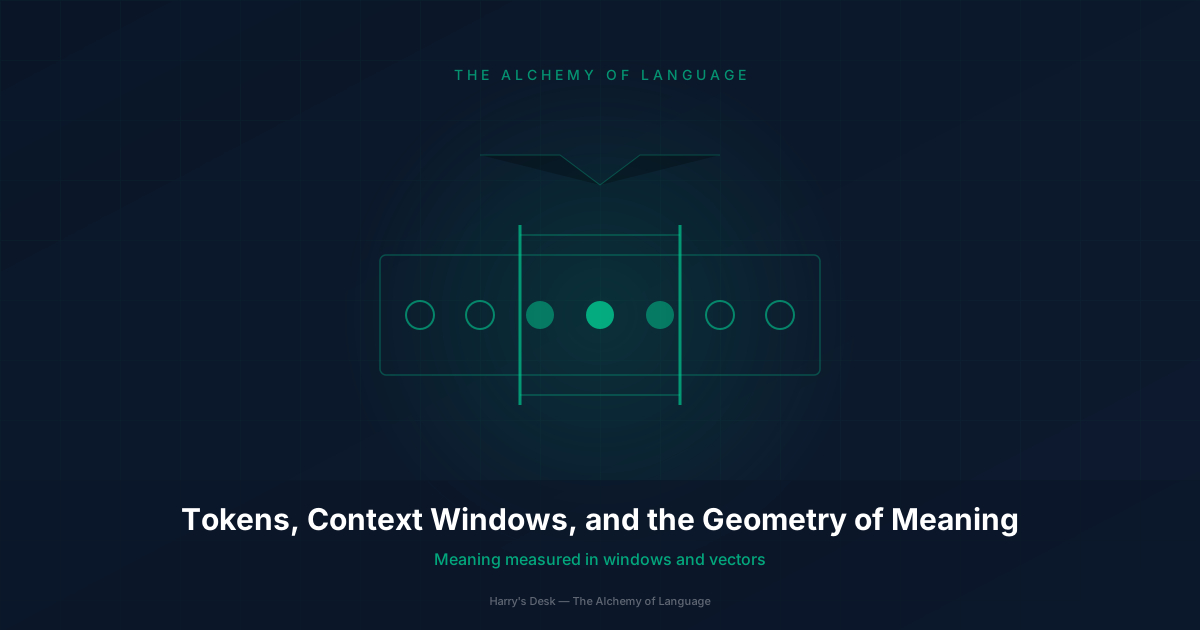
Understanding how language models chop text into tokens, manage working memory through context windows, and navigate a mathematical space of meaning is the bridge between using AI blindly and using it with craft.
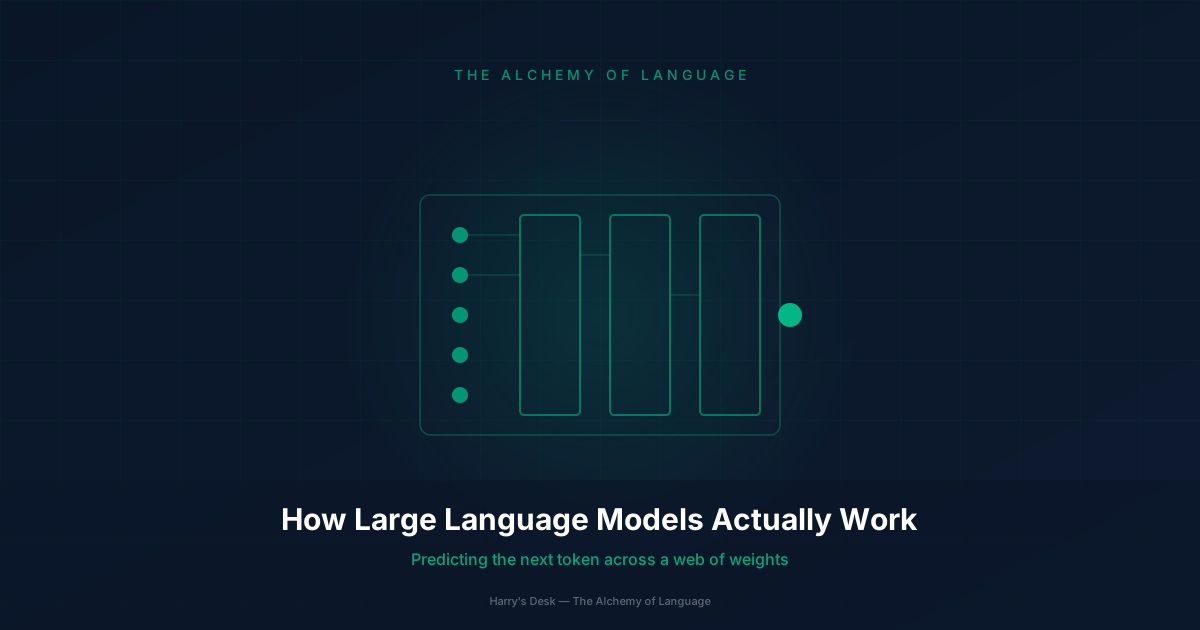
They are not databases. They are not thinking machines. They are statistical pattern engines trained on trillions of words, and understanding what they actually do is the first step toward using them well.
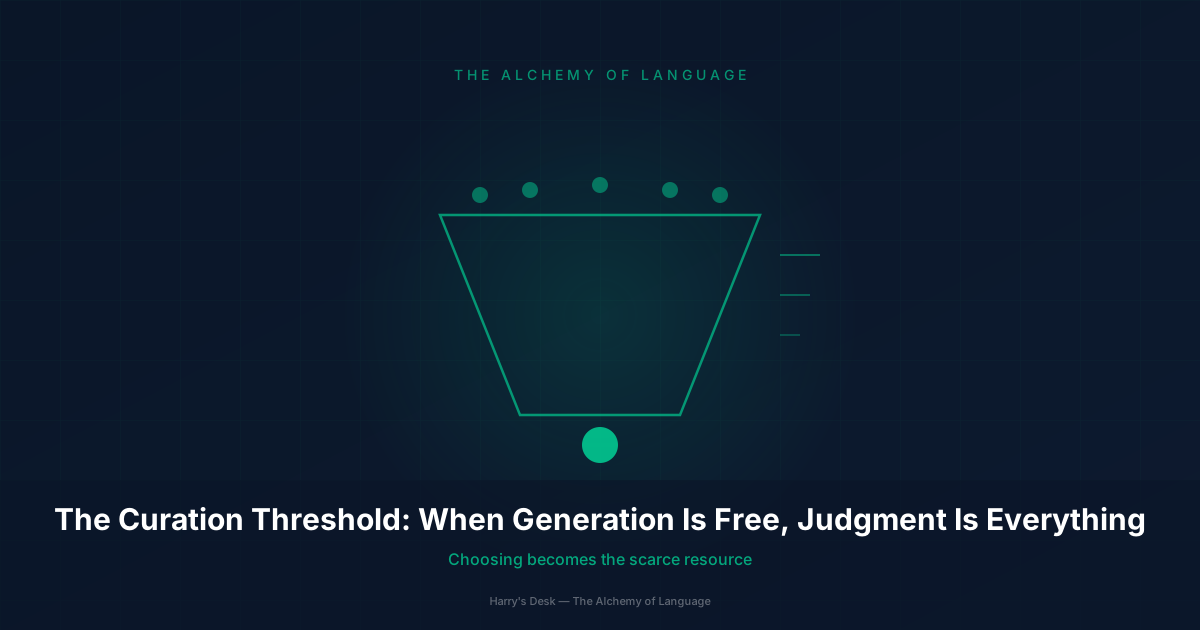
AI can produce ten versions of your paragraph before you finish your coffee. The craft that matters now isn't writing — it's deciding which version deserves to survive.
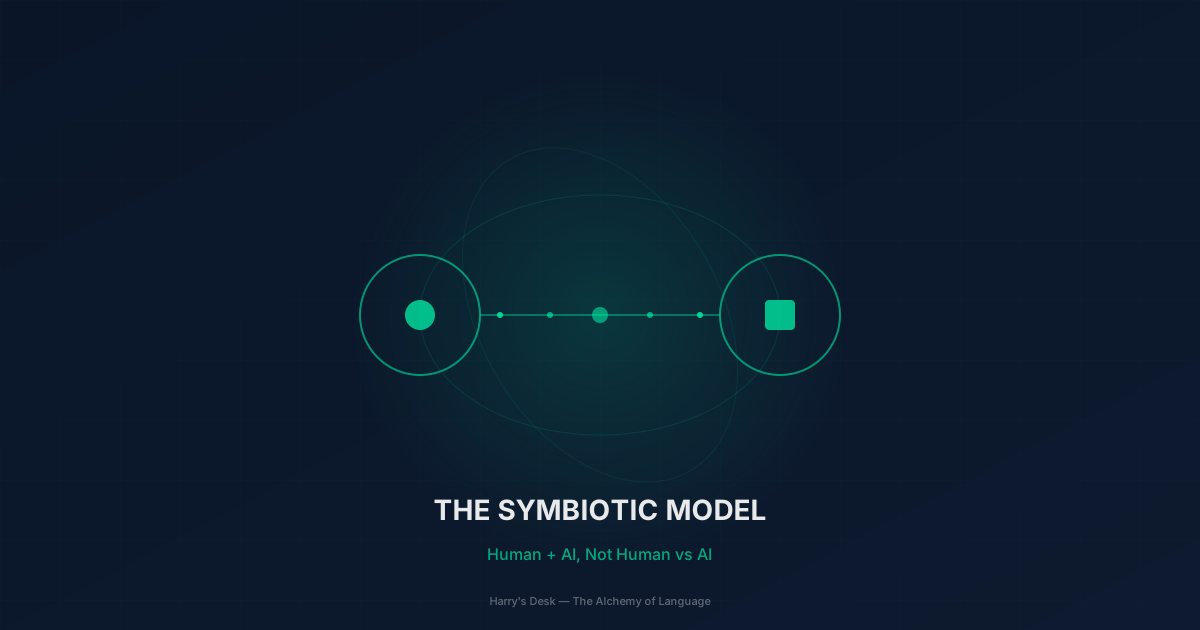
The wrong question is whether AI will replace writers. The right question is what kind of partnership makes both partners better than they are alone.
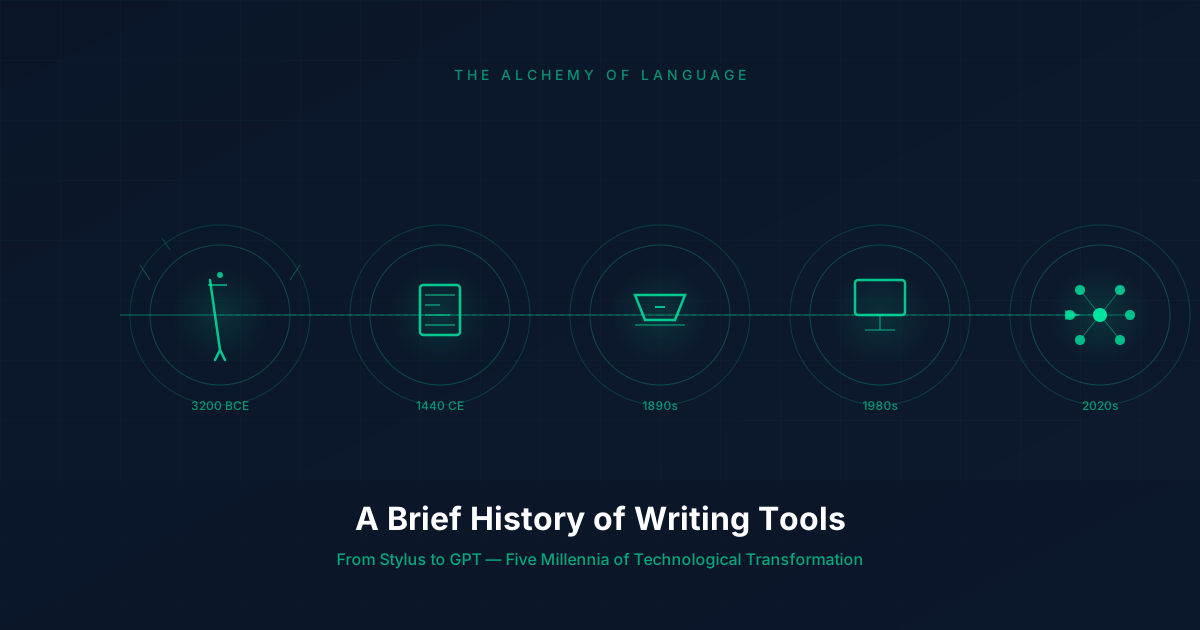
From wedges pressed into clay to tokens flowing through transformers, writing has always been a negotiation between human intention and technological possibility.
The typewriter didn't kill the novel. The word processor didn't kill the essay. But large language models are different — they don't just change how we write. They change what writing is.
AI-generated text doesn't just read well — it reads authoritative. That's the danger. The editor's job has shifted from polishing prose to interrogating it. Welcome to forensic editing.
Welcome to a 56-week journey through the art, craft, and philosophy of writing with artificial intelligence. By the end, you will think like a PhD in AI-augmented authorship.
Where words meet precision. Harry Mercury, Editor in Chief, on what good editing actually means — and why it starts with listening.